
When TAR makes sense
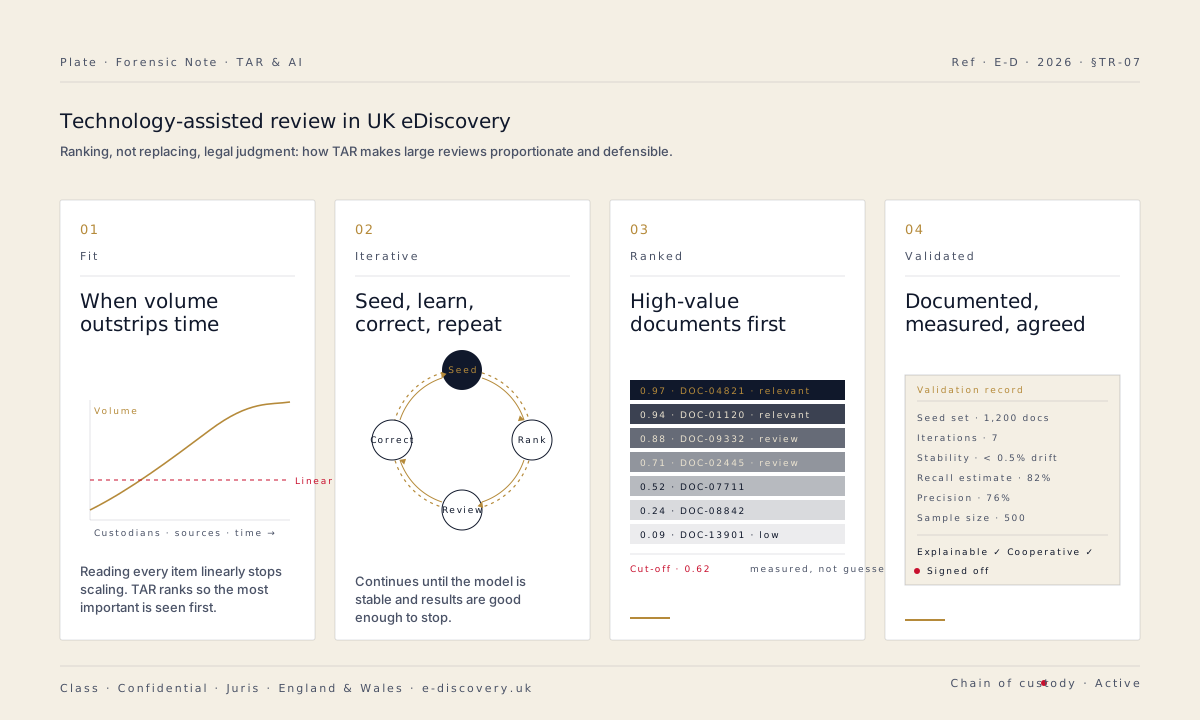
Technology-assisted review (TAR) becomes useful when the volume of documents outstrips the time or budget available to read every item. Rather than reviewing every document linearly, TAR ranks the likely relevance of each item so the most important material is seen first.
It is not a substitute for legal judgment. The reviewers still define what is relevant and train the system. TAR is a tool for making that judgment more efficient and consistent across a large set.
How the process works
Typically, a senior reviewer codes a small seed set of documents. The system learns from those decisions and ranks the remaining documents by similarity. Reviewers then check the high-ranking items and feed any corrections back into the model. This cycle continues until the model is stable and the results are good enough to stop.
Because the process is iterative, it can be more accurate than keyword-only approaches, especially for concepts that are hard to express with simple search terms.
Validation and defensibility
A TAR workflow must be documented and validated. That means recording the seed set, the iterations, the stability measurements and the validation samples. If the process is challenged, the provider should be able to explain how the system was trained and how its performance was measured.
UK courts have accepted TAR where the methodology is transparent and the parties cooperate. The key is proportionality: the approach must be suitable for the size and nature of the data set and the issues in the case.
Cooperation with the other side
Best practice is to agree the TAR protocol with the other party or parties before starting. This includes the methodology, the validation approach and how disputes will be resolved. Cooperation reduces the risk of the review being challenged later and keeps the process proportionate.
Key takeaways
- TAR is useful when large volumes make linear review impractical.
- Reviewers train the system using a seed set, then validate and refine the results.
- Documentation and transparency are essential to defensibility.
- Agree the protocol with the other side where possible to reduce challenges.
Frequently asked questions
Does TAR replace human review?
No. It assists human reviewers by ranking documents. Legal judgment remains central to the review.
Is TAR accepted in UK courts?
Yes, when the methodology is transparent, proportionate and properly validated. Pyrrho and other cases have approved its use.
Can TAR be used alongside keyword filtering?
Yes. Many workflows combine keyword filtering, date ranges and TAR to make the review both efficient and defensible.
Discuss your matter in confidence
Speak to an eDiscovery specialist about forensic collection, processing and review support for your case.
Request a Confidential Consultation